Every normally developed human eye contains within it a crystalline lens. This lens is a clear organ made up of proteins and it's responsible for focusing images on the retina, much like the lens inside a camera that brings images to focus on film.
With time and under the influence of factors such as ultraviolet lights, smoking, poor nutrition, radiation and/or chemotherapy, but most commonly as part of the aging process, the lens becomes cloudy. This occurs due to denaturation of the proteins that make up the lens. This process of clouding of the lens is irreversible and is called cataract formation. As the cataract forms, the light is scattered by the increasingly dense and cloudy lens and results in poor vision.
Who is at risk of developing cataracts?
Patients between the ages of 65 and 70 are at risk of developing cataracts, with up to 50 percent of them suffering from visually significant cataracts that interfere with activities of daily living. Individuals who are on chronic steroid administration, have undergone radiation or chemotherapy, and have had trauma are at risk of developing cataracts at an even earlier age.
What are the symptoms?
Cataract symptoms include halos, glare, a decrease of visual acuity, loss of color perception and contrast sensitivity. Frequently, symptoms are manifested as difficulty seeing road signs, seeing halos and glare from oncoming traffic, trouble reading and photosensitivity.
Cataract treatment in Los Angeles
Most people with cataracts do not realize that they are suffering from a distortion on their lens, as initially any changes in vision may be undetected. The first sign of cataract formation may be when night vision begins to diminish. Fortunately, there are many advanced treatments for modern cataract surgery, without stitches or incisions.
Depending on the degree of the cataracts, a procedure with a leading cataract surgeon may be the only treatment option. The process involves breaking down the cataracts and removing them. As the cataracts were on the lens of the eye, that tissue is also removed and will need to be replaced with synthetic lenses, a process called intraocular lens (IOL) replacements.
How are Cataracts Removed?
The procedure to remove cataracts is one of the most common surgeries performed in America, with about three million procedures every year. The surgery takes very little time to complete and is painless. While you will be awake during the procedure, your eye will be numbed with local anesthesia, and you may have another medication to help you relax.
A very small incision is made on your eye, typically with a specialized laser. Another tool is then used to break up the natural lens and then extract it with gentle suction. Through the same incision, a synthetic lens is placed. If both eyes need cataract surgery, each eye is treated in a separate surgical appointment.
Lens options
Modern cataract care involves the removal of a cloudy crystalline lens (the cataract) and its replacement with a clear intra-ocular lens implant or IOL. The use of intra-ocular lens implants (IOLs) is now considered to be the standard of care. Situations when it is not medically advisable or physically impossible to implant a lens are very rare. Before the advent of modern lens implants, patients were left aphakic (without lenses) and had to resort to use of very thick 'Coke bottle' glasses or contact lenses.
Other than the convenience of not having to wear 'Coke bottle glasses,' there are a number of medical reasons why it is important to have a lens implant. Aphakic eyes (eyes without lenses), are at higher risk of developing glaucoma and retinal detachments. That is why every reasonable effort is always made to place a lens implant in the eye.
There are a number of lens implant options available to the physician and the patient. These lenses all have a basic function of focusing images on the retina. Some lens implants have extended functions, such as correcting corneal astigmatism (Toric lenses) or allowing the eye to focus at both near and far distances, without having to resort to using glasses or contacts (Presbyopia Correcting Lenses). These IOL's with extended functions are usually not covered by health insurance or Medicare. That is because these lenses, while providing patients with the convenience of spectacle freedom, are not considered to be 'medically necessary' by most health insurers. The 'spectacle freedom' afforded by such extended function lenses comes with an added cost that is assumed by the patient.
Cost issues aside, not all lenses are appropriate for all patients. There are various factors that are individual to each patient that must be considered. If the idea of being glasses-free is enticing, about the premium cataract surgery options available at the Benjamin Eye Institute.
What to expect during your appointment
Once you decide you're ready to treat your cataracts and improve your vision, you will need to schedule a consultation with the team at Benjamin Eye Institute. During that appointment, you will undergo in-office preoperative testing and measurements. In addition to a full ophthalmic examination, one of the best cataract surgeons in Beverly Hills, Dr. Benjamin, will review the risks and benefits of cataract surgery with you, along with all of the treatment options that are available to meet your visual needs. Once your surgery is scheduled at our Los Angeles outpatient facility, we will review all of the details and schedule your final examinations. For more information about how to prepare for your surgery and what to avoid post-surgery, visit our page.
Typically, another visit is set to have biometrics performed:
- Keratometry
- IOL Master
- Visual Field Testing
- Corneal Topography
- Corneal Pachymetry
These biometrics will assist in choosing the proper intraocular lens calculations. Logistical aspects of the surgery as well as medications are also discussed at this time.
Counseling will also take place during your appointments at our optometry office. This will include a discussion about the expectations concerning best corrected visual acuity (BCVA), including pre-operative conditions that may prevent perfect results, such as age-related macular degeneration. Counseling regarding uncorrected visual acuity (UCVA) may address goals of surgery, for example being left moderately nearsighted to allow near work to be performed without correction.
Patients with high amounts of astigmatism may not be able to rid themselves entirely of glasses. In this case, the doctor will talk to you about possible treatment modalities for astigmatism, including LRI and/or Toric IOL's. Possible upgrade to a multifocal/accommodating lens implants may be considered if the patient desires.
What are 'Secondary Cataracts?'
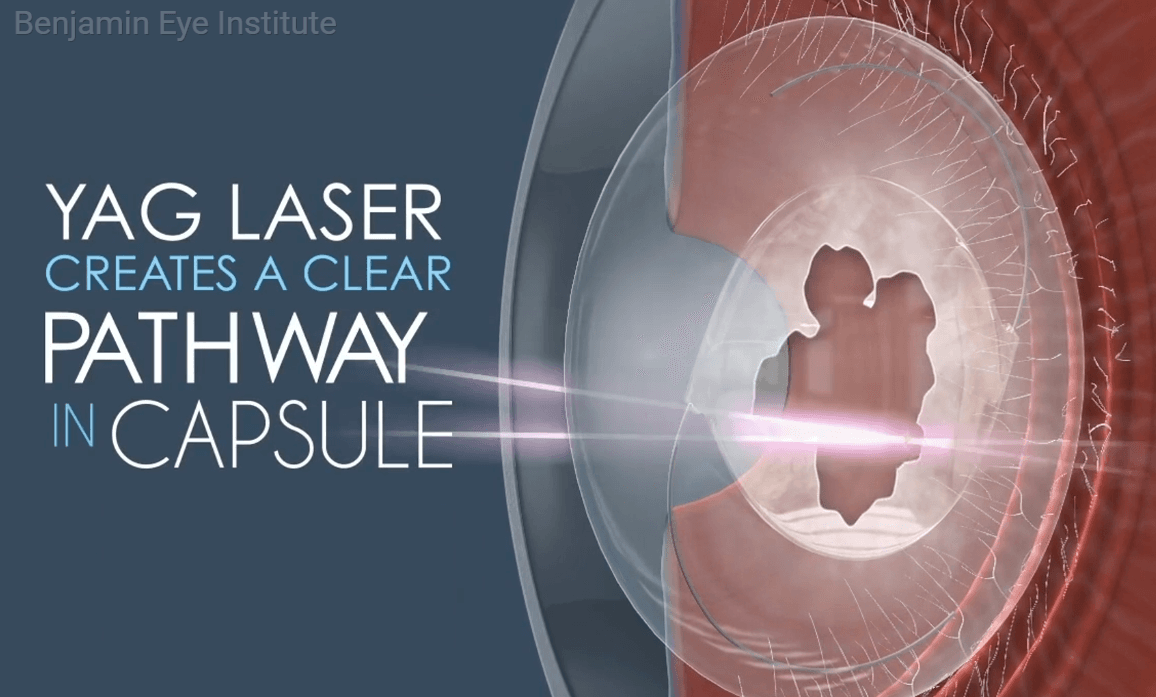
The eye structure includes what is termed a 'lens capsule,' which holds the lens. After cataract surgery, some patients experience what is often called a 'secondary cataract.' This is a condition in which the lens capsule (not the lens) becomes clouded. Other names for this condition are the medical term, 'posterior capsular opacification,' or an 'after cataract.' This condition can be treated with a laser procedure to restore clarity to that portion of the eye. It requires only a few minutes to complete this one-time corrective procedure.
Are Cataracts Serious?
If you have developed cataracts, it will impact your vision. The clouding of the lens associated with the clumping of proteins on the lens causes foggy, blurred, or clouded vision – all of which pose a danger when driving, and impact quality of life. Cataracts that are left untreated can lead to blindness – the most serious of all eye conditions. As the lens becomes thicker and harder it can cause inflammation or increased pressure within the eye, leading to glaucoma.
Can Cataracts Cause Blindness?
If cataracts are left untreated, the lens continues to thicken and harden, and can lead to blindness. Cataract surgery in which the lens is replaced with a synthetic lens can be performed on an eye in this condition, often restoring vision in that eye. It is advised that the surgery is performed before the patient has reached the point of low vision, as the thicker lens is more difficult to remove than one in a less severe condition. Worldwide, about 33 percent of the cases of blindness are the result of untreated cataracts, and 18 percent of cases of moderate to severe vision impairments.
Vision and Quality of Life
While cataract surgery is a commonly-performed procedure – you want to ensure that you are under highly-professional care for this delicate surgery. At Benjamin Eye Institute in Beverly Hills, we are proud to be the premier eye care center serving the Los Angeles area. Our accomplished eye surgeons employ the most advanced technology and we adhere to the most stringent patient safety protocols.
When cataracts are causing blurry vision, it affects every aspect of your life. Clear, sharp vision can be restored with a carefully-performed cataract surgery. At our eye clinic in West Hollywood, we offer patients the option of placing high-tech, advanced interocular lenses that make wearing glasses or contacts unnecessary.