At the Benjamin Eye Institute, we are proud to provide our patients with the comprehensive, preventative and cutting-edge care they need to maintain their optimal eye health for years to come. To begin a lifetime of clear vision, we must begin with an eye exam at our optometry center.
What Happens During An Eye Exam?
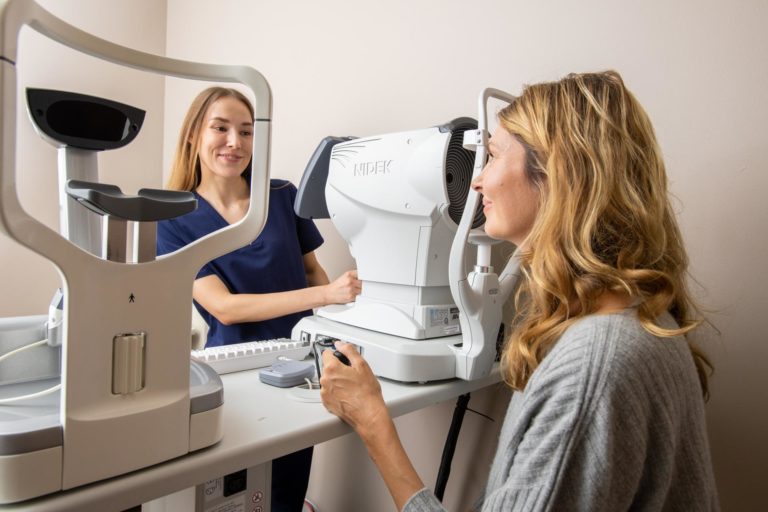
A comprehensive eye examination at the Benjamin Eye Institute includes:
- Extensive review of medical history
- Vision test for refractive errors (nearsightedness, farsightedness, astigmatism and presbyopia)
- Tests for binocular and color vision
- External examination of the eye and lids
- Microscope exam to detect cataracts, dry eye, and corneal disease
- Muscle balance evaluation to determine ocular alignment
- Vitreous examination for floaters
- Evaluation of macular degeneration and other retinal diseases
- Pressure check to screen for glaucoma
Additionally, our eye exam goes far beyond 20/20 to evaluate a variety of important visual skills, such as:
Visual acuity at near.
Is vision clear and single at close distances? Clear sight at short distances is critical to reading, writing, close work, computer use, etc.
Eye teaming skills.
Do the two eyes aim, move and work as a coordinated team? Weaknesses in binocular (two-eyed) vision and eye teaming skills can cause numerous difficulties, including clumsy children and poor depth perception.
Eye focusing skills.
Do the eyes maintain clear vision at varying distances? Rapid, automatic eye focus adjustment is critical to learning, reading, writing, sports, etc. Deficiencies can cause visual fatigue, reduced reading comprehension, and/or avoidance of close work or other activities.
Eye movement skills.
Do eye movements show adequate muscle control, tracking, fixation, etc.?
In the classroom, normal eye movements allow rapid and accurate shifting of the eyes along the line of print or from desk to board, etc. In sports, efficient eye movements contribute to hand-eye coordination, visual reaction time, and accurate tracking.
Above are just a few of the many visual measurements evaluated during our comprehensive vision exam. In addition, the health of your eyes, inside and out, is carefully examined for such problems as cataracts, glaucoma, diabetes and other conditions.
Refraction And Blurry Vision
Refraction is the bending of light as it passes through another medium. Light waves are bent, or refracted, as they pass through the cornea and lens of your eye. The curve of the lens focuses the light onto the retina, or the back of the eye. The image is captured by photoreceptors in the retina and sent to the brain to create the images you see.
How Does Blurry Vision Occur?
Blurry vision occurs when the curvature of your eye improperly focuses the light behind or in front of your retina. Any imperfection in the curve of your cornea or lens can cause light to focus incorrectly, resulting in vision problems known as refractive errors. The three most common refractive errors are:
- Nearsightedness (myopia)
- Farsightedness (hyperopia)
- Astigmatism
General Eye Care in Los Angeles
Our routineeye exams are essential in keeping your eyes healthy and your vision working at its best. Be sure to consult with your eye care professional regarding the regularity of your visits. Generally, if you are between the ages of 20 and 30, you should be examined every two years. Yearly appointments become more important in your late thirties. No matter what your age, if you have diabetes, you should have an eye exam every year, as you are at risk for several eye disorders including diabetic retinopathy, cataracts and glaucoma.
Regular eye exams can diagnose a variety of conditions early on and are the best way to preserve your vision. Many debilitating eye diseases can be diagnosed before symptoms are noticed, potentially making the difference between minor damage and major vision loss. At Benjamin Eye Institute, we believe that early detection is your best defense against eye disease and vision loss.
When you're due, contact Benjamin Eye Institute for your eye exam. If you experience any visual changes in between your regularly scheduled visits, you should be checked by your optometrist immediately. Concerning changes can include excessive squinting, blinking, rubbing eyes frequently, headaches, changes in vision or difficulty with visual concentration.
Preparing For Your Los Angeles Eye Exam
Before your appointment, be sure to ask if the exam will affect your vision temporarily, and if you will need someone to drive you home. You may also want to ask about the cost of the exam, if your insurance will cover any of the cost, and how payment will be handled. When you arrive for your appointment, be ready to discuss any vision-related problems you have been experiencing.
7 Steps You Can Take to Prepare For Your Eye Exam
In addition, you'll want to take the following steps to prepare for your appointment:
- Remove eye makeup prior to your eye exam
- Be sure to bring your medical health and eye insurance information
- New patients are encouraged to .
- Be prepared to discuss any health problems and/or allergies
- Be prepared to discuss previous eye diseases or surgeries related to eye injuries
- Be prepared to discuss your family's history of eye disease
- Let your doctor know about any prescription or over-the-counter drugs you are taking
How Often Should I Get an Eye Exam?
It is recommended that you have a comprehensive eye exam every one to two years, unless you notice changes in your eyesight or certain other behaviors like headaches, squinting, or blinking. Keep track of any concerning behaviors and tell your eye doctor during your appointment. At the Benjamin Eye Institute in West Hollywood a comprehensive eye exam typically takes just 30 to 60 minutes depending on your specific condition.
Bring your current glasses to your exam. You can wear contacts to your appointment, but you will be asked to take them out for parts of the exam so bring your glasses with you.
Who Performs My Eye Exam?
Your eye exam will be performed by one of our board-certified ophthalmologists. Each of our ophthalmologists is highly skilled and can help you identify vision problems before you even realize your sight has deteriorated.
Is It Safe?
Absolutely. Our ophthalmologists use the industry's latest technology to analyze your eyes and diagnose any vision changes or medical conditions. The non-invasive exam is also not painful. If your pupils are dilated you may experience some light sensitivity but it goes away within a few hours. The exam simply identifies any issues with vision or eye health
Why Eye Exams are Important
Most vision changes happen slowly and often go unnoticed because of the gradual change. You might not notice that your vision has worsened until the condition has progressed. Regular eye exams can identify minor changes to your vision so your glasses or contacts can be adjusted before your vision changes become inconvenient or unsafe.
An ophthalmologist can also identify potential health problems during an eye exam. The blood vessels or other structures of your eye can indicate early signs of diabetes, high blood pressure, glaucoma, cataracts, macular degeneration, and more.