If you're like most people, you probably have questions about LASIK eye surgery. At Benjamin Eye Institute, we want our patients to be knowledgeable about the procedures performed at our center, which is why we've created this page for frequently asked questions regarding LASIK.
If you have a question not found on this page, or if you would like to schedule LASIK consultation at Benjamin Eye Institute, please call us today at 310.275.5533!
LASIK Frequently Asked Questions
Isn't all laser vision correction the same?
No. Many of the discount LASIK centers want you to believe that LASIK should be purchased like a 'commodity.' In fact, the following aspects of LASIK matter just as much as the surgery itself:
- A surgeon's experience
- Lasers used during the procedure
- Diagnostic technology
- Follow-up care
Laser vision correction will affect the way you see for the rest of your life. You should make your decision to have laser vision carefully, not quickly or based on lowest price. We understand financial concerns that are tied to the cost of LASIK, but our commitment to providing as many Los Angeles residents with 20/20 vision is important to us, that's why we offer zero interest financing for the first 24 months. Be sure to contact our office to learn more about our financing specials and cost breakdown.
Will I have 20/20 vision following laser vision correction procedure?
The goal of any refractive procedure is to reduce your dependence on corrective lenses (glasses or contact lenses). However, we cannot guarantee you will have 20/20 vision as a result. Our commitment to you is that we will not perform laser vision correction on you or anyone we feel does not have a good possibility of achieving independence from glasses or contacts.
Is laser vision correction safe?
There are possible risks with any surgical procedure. Serious complications with LASIK or PRK are extremely rare. The chance of having a vision-reducing complication from LASIK has been documented in clinical studies to be less than one percent. Many of the risks and complications associated with this procedure can be reduced or eliminated through careful patient selection and thorough pre-operative testing using the latest diagnostic technology.
After laser vision correction, you may experience some of the following visual side effects:
- Dryness
- Glare
- Halos
- Sunbursts
These complications are usually mild and most often diminish over a few days to a few weeks, but there is a slight chance that some of these side effects won't go away completely. If we decide you are a good candidate for laser vision correction, you will be given additional information about the procedure that will allow you to make an informed decision about whether to proceed. We want to be sure that you have all your questions answered to your satisfaction.
How do I know if I'm a good candidate for LASIK?
At Benjamin Eye Institute, we want you to be conformable with your LASIK procedure, and to be completely sure that LASIK is the ideal procedure for you. Call us at or click the banner below to find out how.
Is LASIK Surgery Painful?
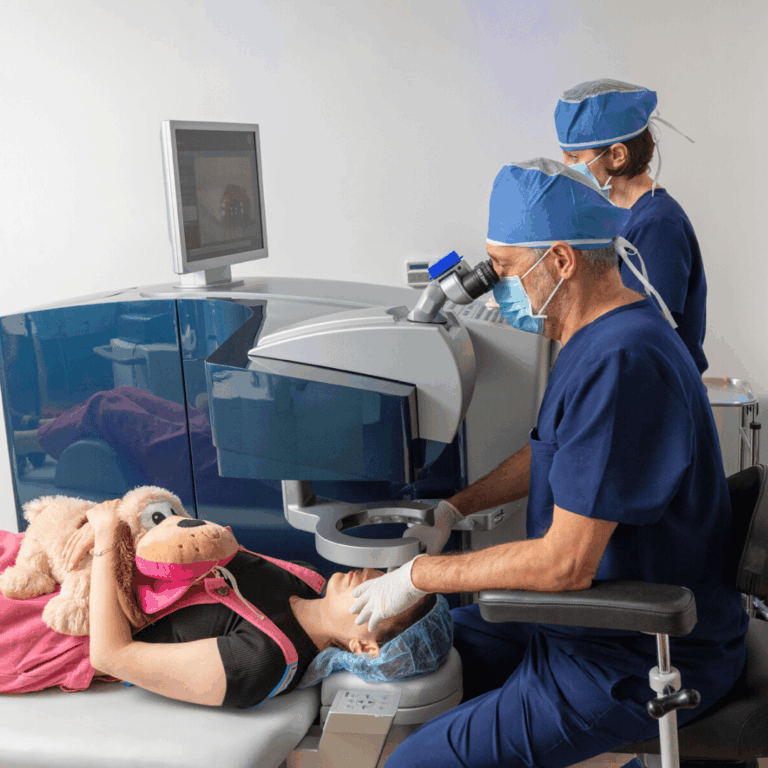
Prior to beginning your LASIK surgery, Dr. Benjamin will place numbing eye drops into the eye(s) on which he is performing the procedure. Following your surgery, Dr. Benjamin can provide you with prescription pain medication if necessary. Many patients report no discomfort or just very mild discomfort following LASIK in the 24 to 48 hours following surgery.
Can I Have Both Eyes Treated at the Same Time?
Yes. We frequently perform LASIK surgery on both eyes at the same time at the Benjamin Eye Institute.
What are the Risks Associated with LASIK?
The FDA recognizes LASIK surgery to be a safe and effective method of vision correction. Certain health conditions can increase your risk of developing complications with LASIK surgery. Autoimmune conditions like rheumatoid arthritis, a compromised immune system, persistent dry eye, herpes simplex of the eye, keratitis, cataracts, or eye lid disorders, among others, all increase your risk of developing complications. You should discuss your complete medical history with Dr. Benjamin in your initial consultation, so he can advise you if LASIK surgery is the right vision correction treatment for you.
What are the Side Effects Associated with LASIK?
Developing side effects as a result of LASIK surgery is uncommon, however, it is still possible. There is a slight risk that your vision will be either over- or under-corrected. LASIK surgery can temporarily inhibit your eye's ability to produce tears, so they may feel dry for the first four to six months as they heal completely. You may also experience halos or double vision, especially at night. These side effects are usually temporary and should resolve themselves within a few weeks.
How Long Does LASIK Surgery Take?
LASIK surgery is usually a quick procedure, taking only a few seconds per eye. The actual procedure can be completed in as little as ten minutes per eye, however, you should plan to spend approximately 60 to 90 minutes in our office the day of your surgery.
What Can I Expect Following LASIK Surgery?
Following your surgical procedure, Dr. Benjamin will place drops or ointment into your eye designed to aid in your comfort and encourage the healing process to begin. You will need to have someone drive you home from your appointment, as your vision will be blurry immediately following LASIK. You should plan to spend the remainder of the day resting and recovering to allow your body to heal. Your eyes may itch, burn, or tear following your surgery, and you may experience mild discomfort, if any. This is all normal and should resolve itself within a few days. You will have a follow-up appointment with Dr. Benjamin within one to two days following your procedure, to ensure you are healing correctly.
What is the Difference between LASIK and PRK?
PRK was the first surgical procedure using a laser for the purpose of correcting of nearsightedness, farsightedness, or astigmatism. While it was a predecessor to LASIK surgery, it is still commonly performed and may be more suitable for certain patients. The biggest difference between the two procedures is how the eye is prepared for correction.
In LASIK surgery, a flap is created in the outer layer of the cornea in order to allow the cornea to be reshaped, which is then replaced once the procedure has been completed. In PRK, the outer layer of the cornea is removed and then discarded before reshaping the cornea. This thin outer layer will repair itself in the days following the procedure.
When May I Resume Wearing Makeup Following LASIK?
You may resume wearing makeup around the eye area one to three weeks after your LASIK procedure has been completed. It is important, however, that you discard any old eye makeup and purchase new products in order to reduce the risk of contamination or infection.
When May I Resume My Exercise Routine Following LASIK?
It is important that you take special care to avoid injury to the eye in the weeks and months following your LASIK procedure, giving your eye ample time to completely heal. You should wait several weeks following LASIK to resume strenuous activities or swimming. Eyes that have been treated with LASIK surgery are more susceptible to injury. For this reason, you should invest in quality safety glasses and sports glasses in order to protect your eyes from injury if you plan on engaging in any activity that could lead to impact.