Open Your Eyes to Ophthalmology
A friend of mine recently visited Benjamin Eye Institute on account of having big floaters in his eyes, which had dramatically increased in number. As a result, he learned that he not only had problems with his retinas, as I suspected, but with diabetes as well. On this and other topics, we met with eye surgeon Dr. Arthur Benjamin.
It seems that a visit to the ophthalmologist can offer you much more than just what’s going on with your eyes.
I never get tired of repeating how important it is to have modern diagnostic equipment. Everyone already knows that the eyes aren’t just a window to your soul. The majority of these systemic diseases, like diabetes, hypertension, thyroidism, arthritis, and a number of others appear in the eyes, as well. Ophthalmologists are often among the first doctors to detect these diseases, and what’s more is that for people who already know that they have some kind of disorder or disease, be it diabetes or hypertension, it is still important to periodically visit the ophthalmologist.
You can check your blood sugar yourself several times a day. Why has an ophthalmologist do it?
To determine at what stage the disease is and if it is being well-controlled through treatment. An ophthalmologist can see the bigger picture because diabetes affects many organs… kidneys, lungs, and even the brain. Renal failure, heart problems and heart attacks – these are all consequences of diabetes.
In other words, a person won’t even remotely be aware that this chronic disease has reached a critical point, but you’re able to determine that for them?
Let’s say a patient goes to the doctor with diabetes. An experienced endocrinologist will remind their patients that it is necessary to go to the ophthalmologist. Why do they know to do this? The fact of the matter is that the eyes show what’s going on in the entire organism due to diabetes. Many diagnostic devices can pinpoint what’s happening in the retina. For example, our OPTOS retinal camera combs the fundus, scanning the retina, and allowing us to see the layers and levels of the retina at a high resolution. And there are other non-invasive tests that allow us to see how the blood vessels are working in the retina, the arteries, and even microscopic capillaries. But the retina, in turn, affects processes which occur in the brain, lungs, and nervous system.
So I can think that everything is ok with me, when in reality it’s not?
Fortunately, sometimes everything is just fine. Maybe not perfect, but good. But since good test results might cause you to let your guard down, the endocrinologist will sometimes advise you to see an ophthalmologist. If there are problems in the retina, then that means everything isn’t ok. That’s why you need to see the eye doctor periodically. They can not only offer the correct diagnosis, but also show you what’s really going on and possibly refer you to another doctor that isn’t an eye specialist.
Do I understand correctly that there’s a paradox, that the endocrinologist may not be able to see an endocrinological problem, but you can?
Yes, they can’t see what I see. And that doesn’t mean they’re good or bad; it’s just that they don’t have that specific equipment or the skills to use it. Just like I don’t have the skills for a clean endocrinological examination. In order for this to work like it needs to, you need not only diagnostic machines, but also what we’ve had in the office for 17 years now – an electronic filing cabinet.
Nowadays it’s catching on.
We used them long before it came into vogue. There’s a file for each patient – all our tests, all our diagnostic calculations. The electronic system won’t burn up in a fire or get lost in a flood, and everything is backed up in the cloud. Even if something happens to the building, all of the data is stored. The system gives access to the patients, as well, so you can check on your test results and so on, and of course we can send these files to other doctors. This allows you to communicate effectively with your colleagues. If I see a patient who goes to the endocrinologist, it’s necessary to send the latest data on them. When you go to a new doctor, let’s say, for hypertension or high cholesterol, they’ll already have a report from the ophthalmologist, which tells them everything about your history of illness. Your new doctor promptly receives information of cardinal importance about you, so you aren’t a dark horse.
Speaking of dark horses, such was the case recently with the new technology Symfony, which you were one of the first in Los Angeles to have, like always. Remind the reader what the charm is of these new lenses, when the previous ones were already pretty good.
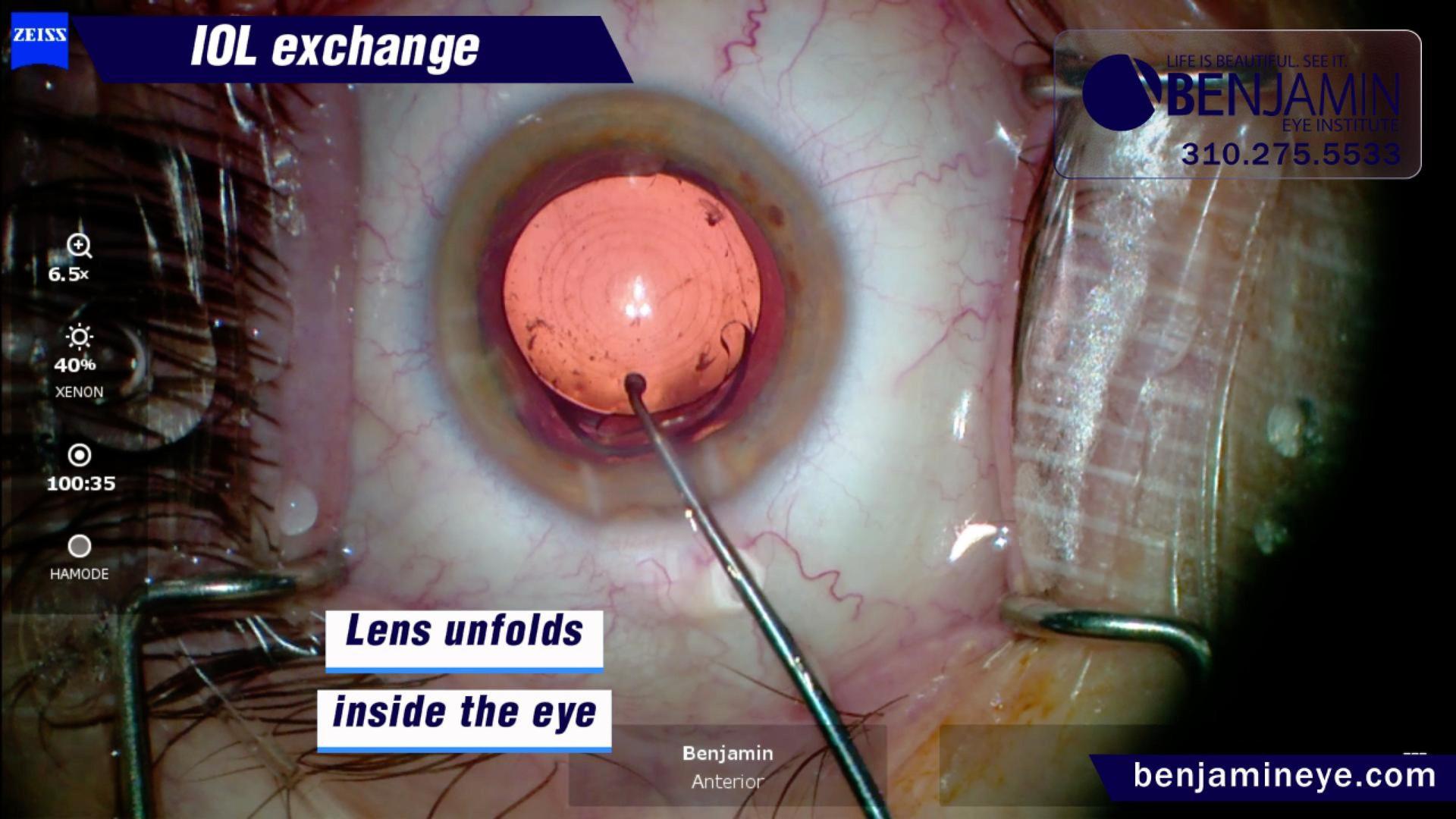
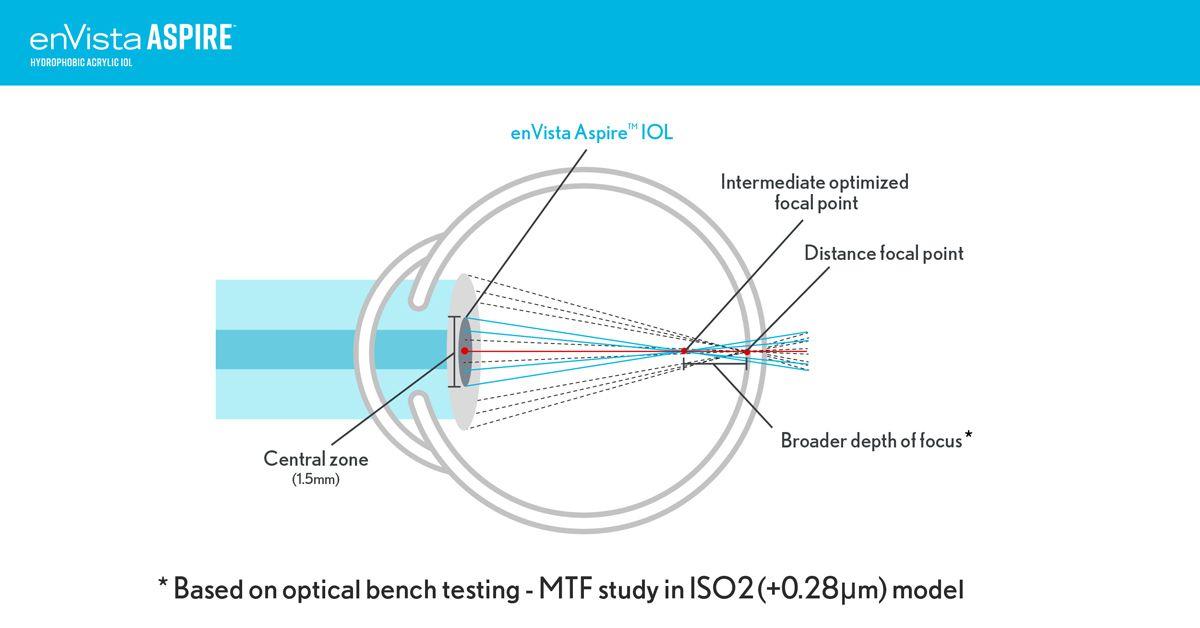
It’s a really revolutionary solution. The usual multifocal, artificial lenses allow great vision in the distance (mountains, driving a car, watching television) and up close (newspapers, telephones), but not so much in mid-distances – social situations, computer, speedometer, GPS. Furthermore, there are problems with haloes, glare, reflections, rays, diffusion, a loss of contrast, and a partial loss of light. People often complain, “I can see, but there isn’t enough light.” It would be nice if the transitions between distances were smooth and without loss. Until Symfony, there wasn’t a lens that could handle all these problems. There was always some kind of compromise, but now such a lens exists.
I’ve read that these new lenses have a possible defect with haloes, the same as monofocals. Are the new lenses superior in all aspects over the monofocals and old multifocals?
Yes, in this narrow sense the new lens is even better than the monofocal. Symfony is a complex diffractive lens with precise resolution. One of its main advantages, other than the mid-distance vision, is the high contrast it offers. It has proven to provide contrast in very low-light conditions. Put technically, it provides a full diffractive surface, combined with a modified, elongated shape.
Explain this contrast.
Anyone can see black letters on a white board, but try looking at grey letters on a grayish-yellow page. The contrast is low and the colors may merge. The imposition of a positive aberration in the usual spherical lens on top of the positive spherical aberration of the cornea can reduce contrast, and with that the quality of vision. The new lens with its modified, elongated shape is able to compensate for the spherical aberration of the cornea.
Is the surgical procedure different than before?
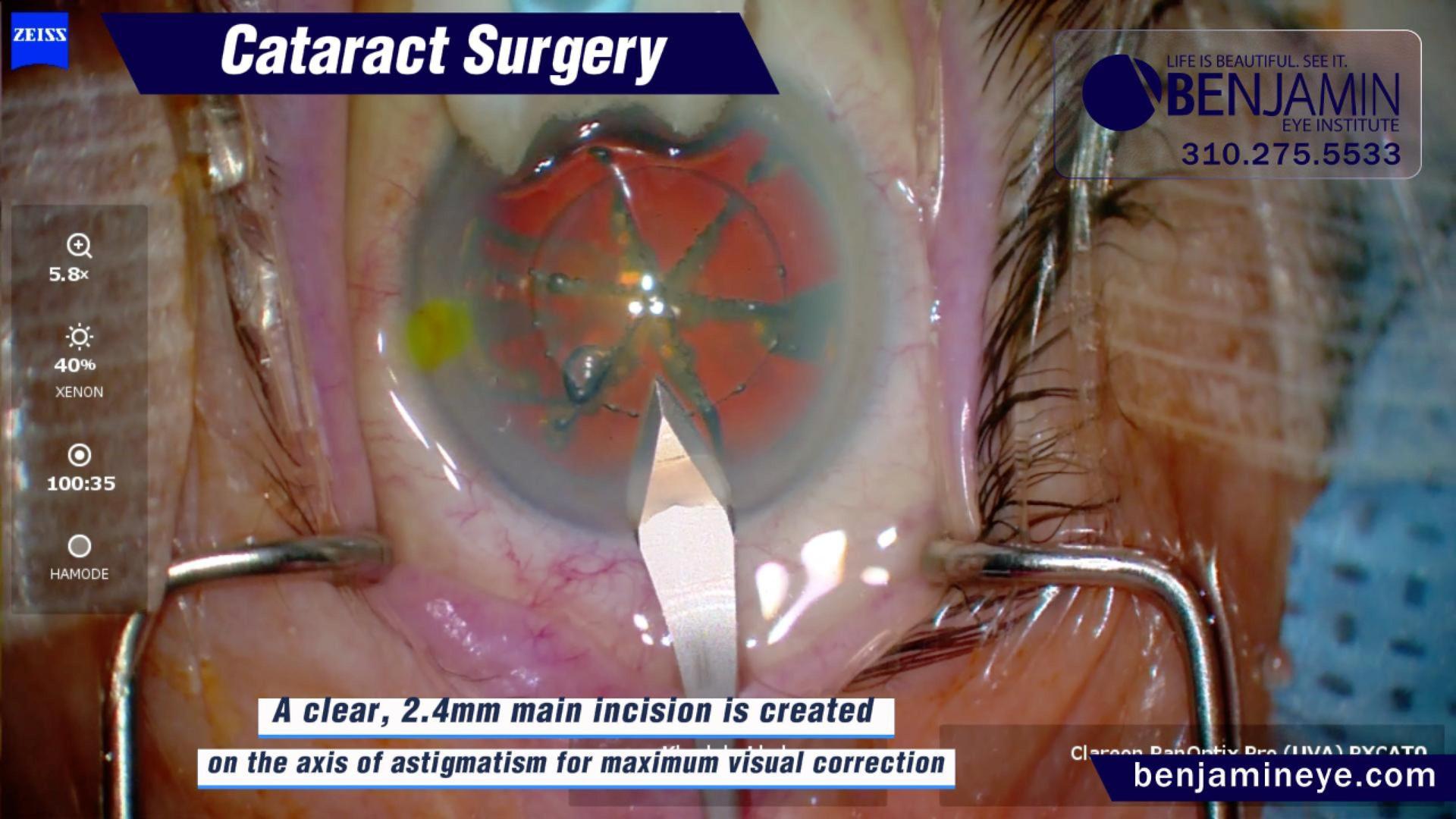
We’ve already said many times that it’s not just this product or another, but also in the hands of the surgeon. Theoretically, you could buy almost any lens and have it inserted by any doctor. However, it doesn’t always turn out as you’d like. For good results, you also need first-class equipment. Even if you correctly perform the operation, but took insufficiently exact measurements, the patient will not be happy. Speaking of the new lens, I should add that it’s not just spherical but toric, which allows the ophthalmologist to rescue the patient from astigmatism without making an incision, which is fraught with problems, and promise the patient even better vision. Thanks to the elongated focus – from far away to very close – the problem of the mid-distance is brilliantly solved. Everything focuses smoothly: mountains, the sky, television, traffic signs, directions on your phone, the eyes of your beloved… a continuous range of focus!
The previous lenses have not depreciated in value?
Lenses never depreciate in value; they only become more expensive. I was the first in Los Angeles to implant a multifocal lens, and that was May 5th, 2005. Since then, of course, the lenses have continued to improve. It was $1500 per eye then, and it’s almost $4000 now. Why? That’s because the price goes up with each new edition. And if you say, “Then give me the old version!”, they’ll respond, “We don’t make them anymore. We will not make a poor, obsolete product. Only the best.”
I get it… just like Apple. My iPad, for example, is now considered an uninteresting, prehistoric monster, and it’s only a few years old. And you don’t see a drop in price because this version simply isn’t available anymore.
Again, this new lens, despite its revolutionary nature, isn’t dramatically more expensive.
It’s a pity that I already have the older model. I wish I had this rich-in-contrast supervision!
Yes, you have the good, old monofocal. But the Symfony is newer and better. As a consolation, I can tell you that these new lenses aren’t for everyone, just like any other. And in order to best select candidates for this phenomenal new lens, you need intelligent diagnostic equipment, experience, and a well-coordinated team of professionals.
LASIK, CATARACT, GLAUCOMA: Take advantage of the latest technology and one of the best teams in LA Benjamin Eye Institute310-494-7193