310.275.5533
call or text
310.275.5533
call or text
Home » Ophthalmology Blog » Symfony: A New Revolution in Ophthalmology

Symfony: A New Revolution in Ophthalmology

Published: November 21, 2022

Need more focus in your life? Meet Symfony lenses– artificial lenses of the new generation that will give you a great vision as well as great focus (from far to very close). After all, you will finally be able to see the mountains, sky, television, traffic signs, addresses and telephone numbers. Hooray!

Symfony: A New Revolution in Ophthalmology

Symfony: A New Revolution in Ophthalmology

As soon as I read in the news that we are starting to explore Tecnis’ new artificial lens, which provides high-quality vision near and far, with high contrast even in low light, I called the Benjamin Eye Institute immediately, forgetting that it was a Sunday. Nevertheless, Arthur Benjamin called me right back. I wasn’t disappointed: he was not only aware of this, but once again a pioneer.

What is the attraction of this new lens, if the previous one so nearly reached perfection? What are the pros and cons of Symfony lens?

It was not perfect, and the new lenses are a truly revolutionary solution. The typical multi-focal artificial lens allows good far-sighted vision (mountains, behind the wheel, and television) as well as near-sighted vision (newspaper or smartphone), but it isn’t so good for mid-distances, like in conversation, shopping, using a computer, or reading the speedometer or GPS. In addition, there are problems with “halos”, reflections, glare, “spray”, loss of contrast perception, and a partial loss of light. I would like for the transitions between those distances to be smooth and without these losses. For reasons that are too much to explain here, typical multi focal lenses (which at the time were atypical) lose about 20% of light, and in the case of astigmatism correction the result strongly depends on corneal procedures. People often complained that they could see everything, but there wasn’t enough light. There was no lens that could solve all these problems, and it was always a compromise until now. Now that lens exists.

I read that these new lenses may have only a small halo effect, like that of amono-focal. Is this new lens superior to both the oldmono-focalandmulti-focalproducts?

Yes, in this narrow sense the new lens is as good as the mono-focal, but likely even better. They finally learned how to make complex diffractive lenses with precise resolution, and the truth is that making them was extremely difficult. If you are creating them for a huge telescope, it is understood that this will cost hundreds of millions of dollars, the same of which is true of these tiny lenses on an industrial scale.

You said “they”, so who are they? Are they domestic?

Yes, they’re an American group called Abbott Medical Optics, but let’s go back to the benefits of these new lenses. One of their main attractions, other than mid-distance vision, is the high contrast. Tecnis lenses have demonstrated contrast in very low light.

Could you explain this contrast?

Anyone can see black letters on a white background, but try reading grey letters on a grayish-yellow page. The contrast between the letters and paper will be minimal, so it can blur together. The modified, elongated form of these new lenses can compensate for the spherical aberration of the cornea.

Studies show that a reduction in spherical aberration of intraocular lenses, as applied in Tecnis‘ advanced technology, improves driver safety. It may not be clear why, to the layman, but the implications are serious. What will this new discovery do for your patients?

It’s already been used and proven effective for the last five years in Europe, and that’s because there are less stringent regulations there. For this reason, our products at times catch on faster there than they do here. It’s even faster than that in Latin America, because they don’t share the same ethical requirements or controls.

It’s clear that such a lag will have its pros and cons, but the primary advantage for our countrymen is that it has already been tested in other countries. Are the procedures in surgical planning different than before?

We always say that it’s not just this or that new product; it’s also the surgeon. In theory, anyone could buy almost any lens and have it inserted by any doctor. However, it doesn’t always turn out the way we’d like. The doctor also needs first-class equipment. Even if the operation is done correctly, but accurate measurements were not taken, the patient will not be pleased with the results. Speaking of this new lens, I should add that they’re toric (as well as spherical), which allows physicians to treat patients with astigmatism non-surgically. Thanks to its greater focus – from far to very close – the problem of mid-distance vision is brilliantly solved. Mountains, the sky, television, traffic signs, addresses and telephone numbers… all of these can be seen clearly.

It seems that we will soon be like the Terminator, whose vision exceeds that of an ordinary human. That said, surely these lenses have started a furor, no?

S. Varo

(to be continued)

LASIK, CATARACT, GLAUCOMA: Take advantage of the latest technology and one of the best teams in LA Benjamin Eye Institute310-494-7193


Back

SEE WHAT OURPATIENTS HAVE TO SAY

Posted on Google Google
Jim B profile picture
Jim B
Google star 1Google star 2Google star 3Google star 4Google star 5Trustindex verifies that the original source of the review is Google.
Everyone is always pleasant and kind and attentive. Focused and on schedule.

Owner's reply
Thank you for your wonderful feedback, Jim! We're thrilled to hear you had a great experience from start to finish. Your recommendation means a lot to us! We look forward to serving you again in the future.
Posted on Google Google
Nick Ben-Meir profile picture
Nick Ben-Meir
Google star 1Google star 2Google star 3Google star 4Google star 5Trustindex verifies that the original source of the review is Google.
Efficient service, and Dr Benjamin ahead of the curve, as always

Owner's reply
Thank you for your 5-star review, Nick!
Posted on Google Google
sharon piehl profile picture
sharon piehl
Google star 1Google star 2Google star 3Google star 4Google star 5Trustindex verifies that the original source of the review is Google.
Everyone was very kind and I felt comfortable being there for the first time.

Owner's reply
Dear Sharon, Thank you so much for your kind review. We’re so glad to hear that you felt comfortable and well cared for during your first visit. We truly appreciate you choosing Benjamin Eye Institute and look forward to seeing you again. The Benjamin Eye Institute Team
Posted on Google Google
Luba Lubov profile picture
Luba Lubov
Google star 1Google star 2Google star 3Google star 4Google star 5Trustindex verifies that the original source of the review is Google.
Great experience and I recommend this eye doctor.

Owner's reply
Thank you, Luba, for your very kind words! Looking forward to seeing you soon at Benjamin Eye Institute!
Posted on Google Google
Peter Trivelas profile picture
Peter Trivelas
Google star 1Google star 2Google star 3Google star 4Google star 5Trustindex verifies that the original source of the review is Google.
Profesional, skilled, personal, friendly.

Owner's reply
Thank you so much, Peter! Your kind words mean a great deal to us!
Posted on Google Google
Marjorie Dick Stuart profile picture
Marjorie Dick Stuart
Google star 1Google star 2Google star 3Google star 4Google star 5Trustindex verifies that the original source of the review is Google.
Always the best! Beautiful office, beautiful , helpful staff, amazing customer service, all the best equipment, and the best doctor. They will take good care of you!

Owner's reply
Thank you so much, Marjorie! Your kind words mean a great deal to Dr. Benjamin and our entire team! We truly appreciate your trust!

Related Articles

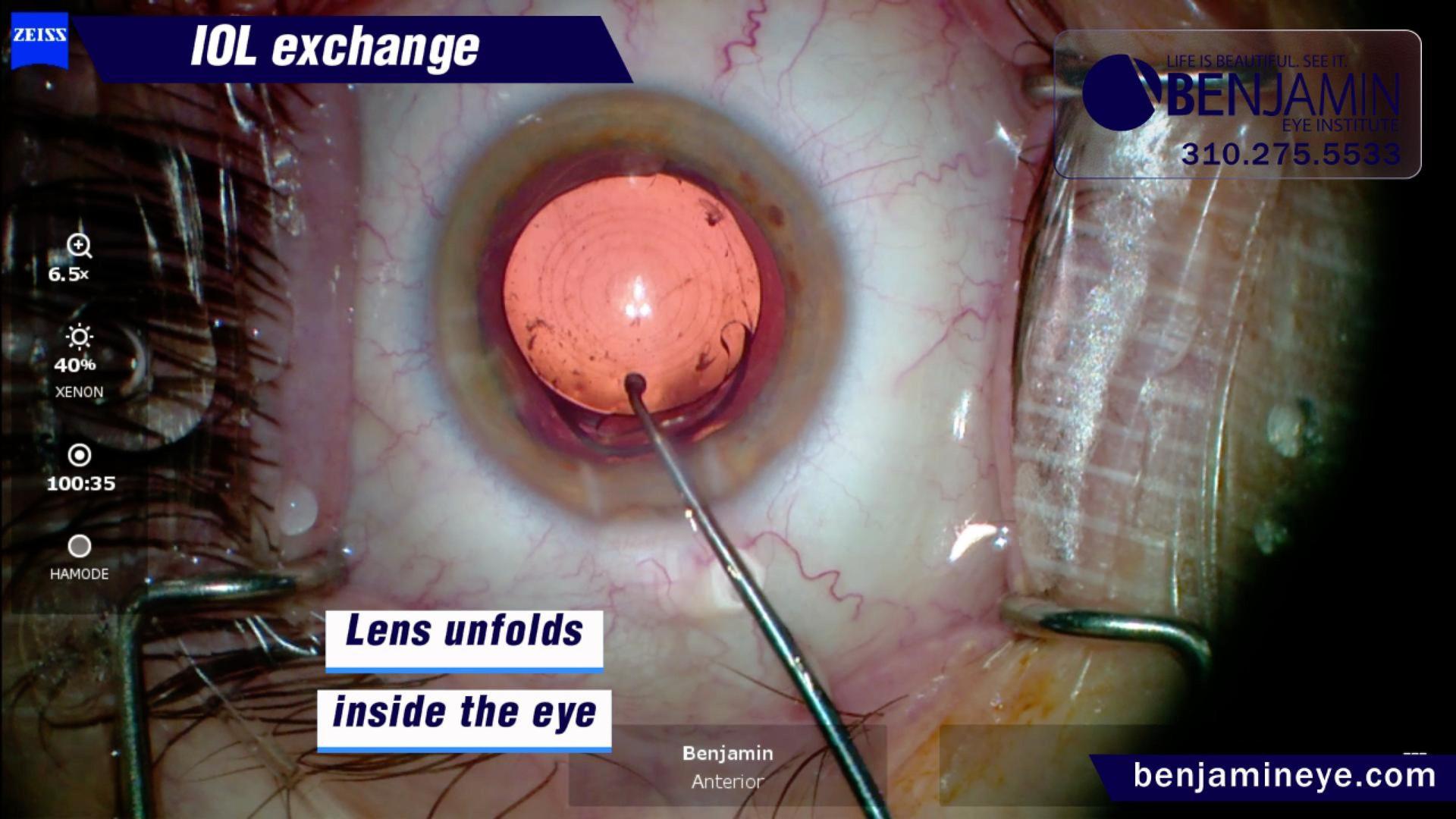
IOL Exchange Surgery: When a Lens Implant Needs to Be Removed and Replaced

IOL Exchange Surgery: When a Lens Implant Needs to Be Removed and Replaced

May 28, 2026

An IOL exchange is a specialized procedure used to remove and replace a previous lens implant when the original IOL no longer provides the best possible vision or when a different lens may better support the patient’s needs.

more
Cataract Surgery with OMNI MIGS: restoring vision while protecting eye health

Cataract Surgery with OMNI MIGS: restoring vision while protecting eye health

January 29, 2026

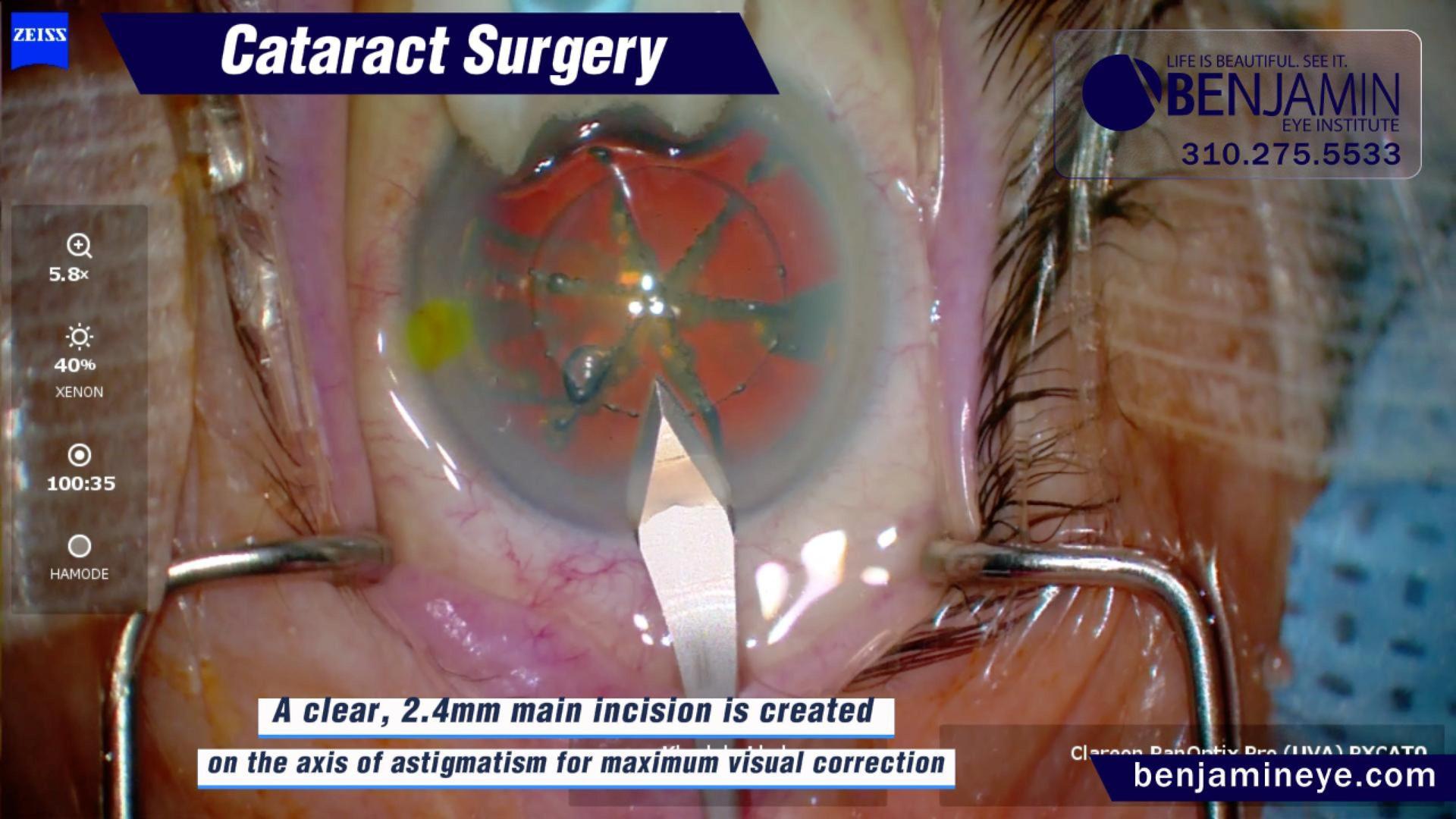
Cataract surgery today is no longer just about removing a cloudy lens—it’s about improving overall eye health and long-term visual outcomes. For patients who have both cataracts and glaucoma (or elevated eye pressure), modern ophthalmology now offers a powerful combined solution: cataract surgery with OMNI® minimally invasive glaucoma surgery (MIGS).

more
Cataract Surgery: Myths vs. Facts

Cataract Surgery: Myths vs. Facts

May 14, 2025

Cataracts are a common vision concern, yet misinformation still makes many people hesitant about seeking treatment. At Benjamin Eye Institute, we're here to clear the confusion and ensure you have the facts about cataract surgery.

more
The Ultimate Vision Transformation: From ICL to LASIK to Light Adjustable Lens!

The Ultimate Vision Transformation: From ICL to LASIK to Light Adjustable Lens!

February 20, 2025

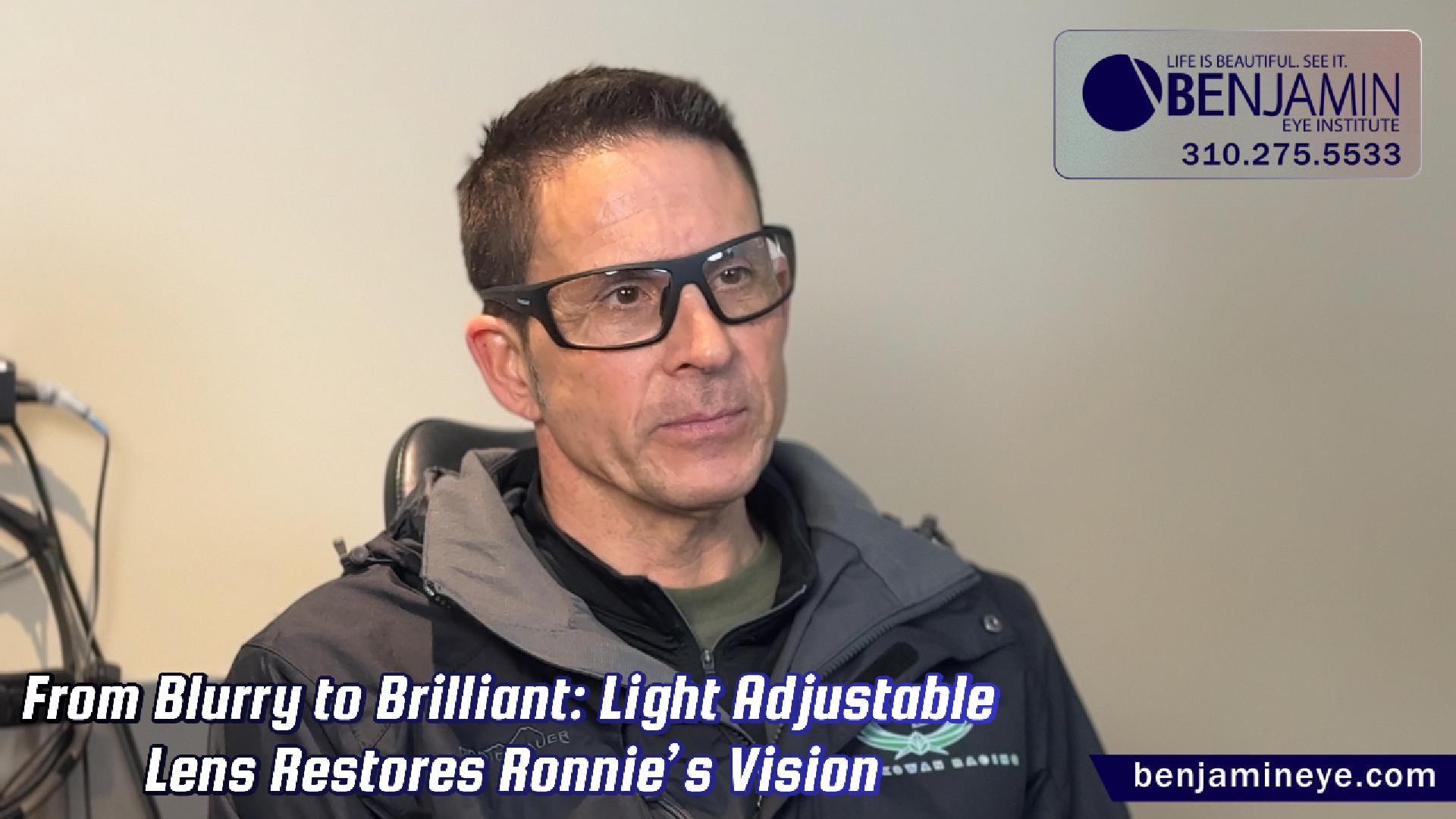
Meet Ronnie, a longtime friend and patient of Dr. Arthur Benjamin, who has been on an incredible vision correction journey! From wearing rigid gas permeable contact lenses and being severely nearsighted (-16 to -17 prescription) to undergoing Intraocular Phakic Contact Lens (ICL) implantation, LASIK, and now Cataract Surgery—his case is a true eye care success story!

more
See the Difference: How ALLY® Is Changing Cataract Surgery

See the Difference: How ALLY® Is Changing Cataract Surgery

January 31, 2025

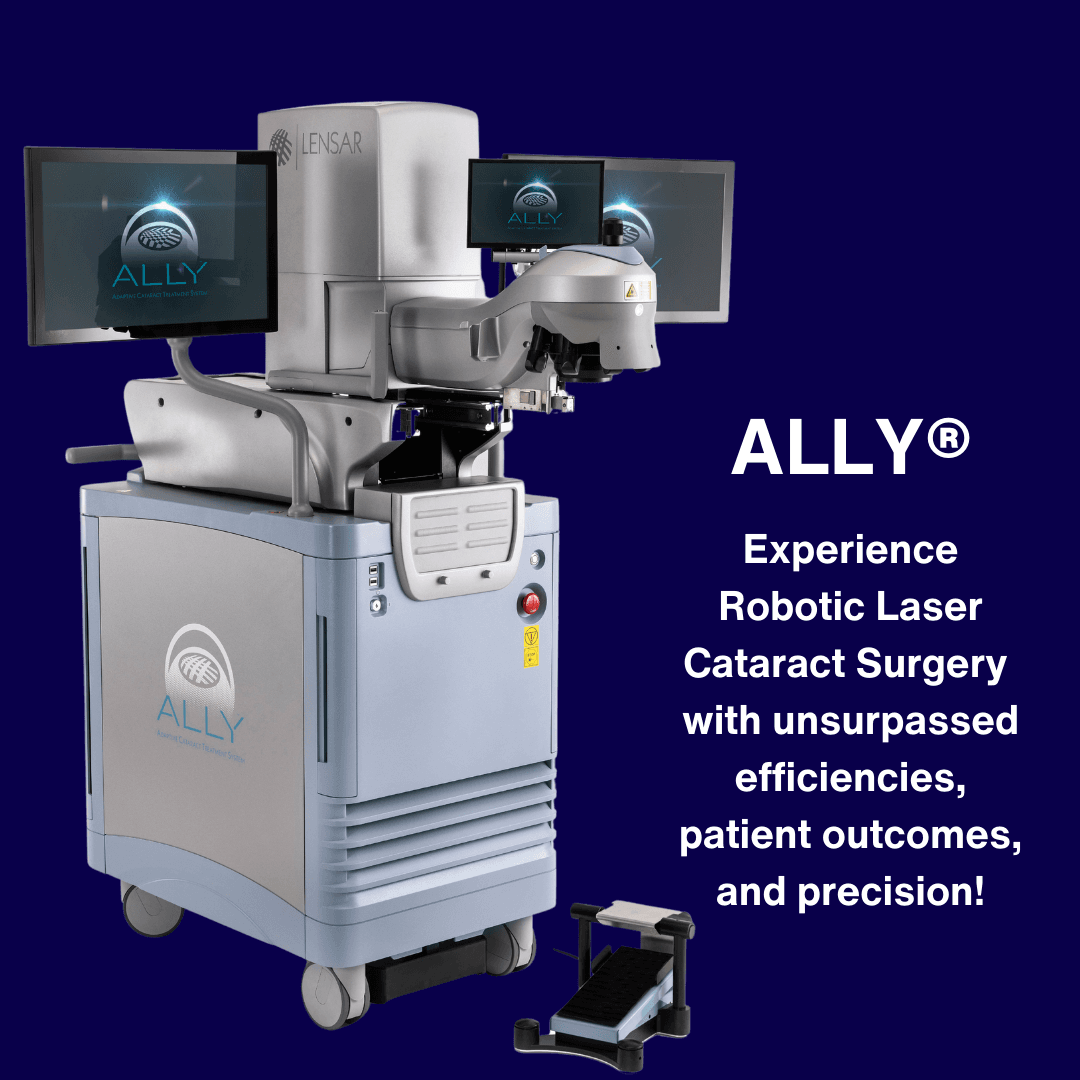
Dr. Arthur Benjamin is one of the first surgeons in Los Angeles to offer custom laser cataract surgery with the revolutionary ALLY® Adaptive Cataract Treatment System. This cutting-edge technology combines advanced imaging with optimized femtosecond laser precision, allowing the entire procedure to be performed in a single, sterile setting—enhancing efficiency, accuracy, and patient comfort.

more
Cataract Surgery: What You Need to Know

Cataract Surgery: What You Need to Know

January 30, 2025

Are you experiencing blurry vision, increased sensitivity to light, or trouble seeing at night? These could be signs of cataracts—a common age-related condition that affects millions of people worldwide. Fortunately, cataract surgery is a safe, effective, and life-changing procedure that restores clear vision and enhances your quality of life.

more
The Essential Guide to Cataract Surgery

The Essential Guide to Cataract Surgery

September 10, 2024

The first thing you should do after receiving the official diagnosis of cataract is to remain calm because they are easily curable. Making the appropriate choices for a location and doctor for treatment is the second and most important step. Here are 8 Important Questions You Should Ask Your Surgeon. By asking any potential surgeon these eight questions, you can feel confident you’re putting your vision in the right hands, and you will soon say goodbye to your cataracts and hello to the clearest vision you have ever experienced.

more
Introducing the Bausch and Lomb Aspire IOL: A New Standard in Vision Clarity

Introducing the Bausch and Lomb Aspire IOL: A New Standard in Vision Clarity

June 12, 2024

At the Benjamin Eye Institute, we are thrilled to introduce the latest innovation in intraocular lenses (IOLs) from Bausch and Lomb – the Aspire non-diffractive extended depth of focus IOL. Available in both Toric and Spherical versions, the Aspire IOL offers an exceptional option for patients who dream of reducing their dependence on glasses for both near and far vision.

more

SCHEDULE YOURCONSULTATION TODAY!